
For women who know their words matter.
The words we inherit. The ones we question.
The ones we write, publish, underline, and argue with.
Welcome to Marginalia.
The Robots Have Entered the Bookshop: How to Optimise Your Book Description for AI
People are increasingly asking AI to recommend books. Here’s how to make your book description clearer to AI without sacrificing your voice, stuffing it with keywords or forgetting the human reader.

Book Formatting & Publishing FAQ for First-Time Authors
A practical guide to the things authors panic about before they hit publish.
How to Self-Edit Your Book Before Hiring an Editor: What Editors Wish Every Author Knew
Before you pay someone else to edit your book, why not see how much better you can make it yourself.

Show, Don't Tell: What It Actually Means (With Examples That Make Sense)
f you’ve been around writers, or Googled “how to write better,” you’ve no doubt come across this golden rule or writing:
“Show, don’t tell.”
But WTF does that even mean? Like, show what? Tell what? Am I supposed to mime my trauma onto the page?
Well, I’ve got you, without the fluff and condescending remarks. And I’ll include a few examples that actually make sense.

How Language Shapes Reality (And How to Rewrite Your Life)
The words you use, both out loud and internally, are not neutral. They function as instructions to the brain, as filters for perception, and as scripts for identity. Over time, they don’t just describe your experience, they begin to define it.
If the language doesn’t change, the pattern doesn’t change. At best, you end up sprucing the same story with slightly better thoughts.

The “Time Is Money” Spell: A 200-Year-Old Lie We're Breaking
That moment someone asks for your hourly rate and your entire nervous system recoils like you're probably better off selling your big toe on OnlyFans.
Meanwhile, the 23-year-old tradie who looks like he's barely old enough to buy a beer quotes $180 to check your pipes and nobody questions it. We've collectively decided his time is valuable because... he charges for it, without apology. He doesn't even cringe.
So why do we?
Your words are powerful beyond measure.
Every story we carry, every belief we repeat, every label we adopt becomes a line in the script we’re unconsciously living out.
But what if the script was never yours to begin with?
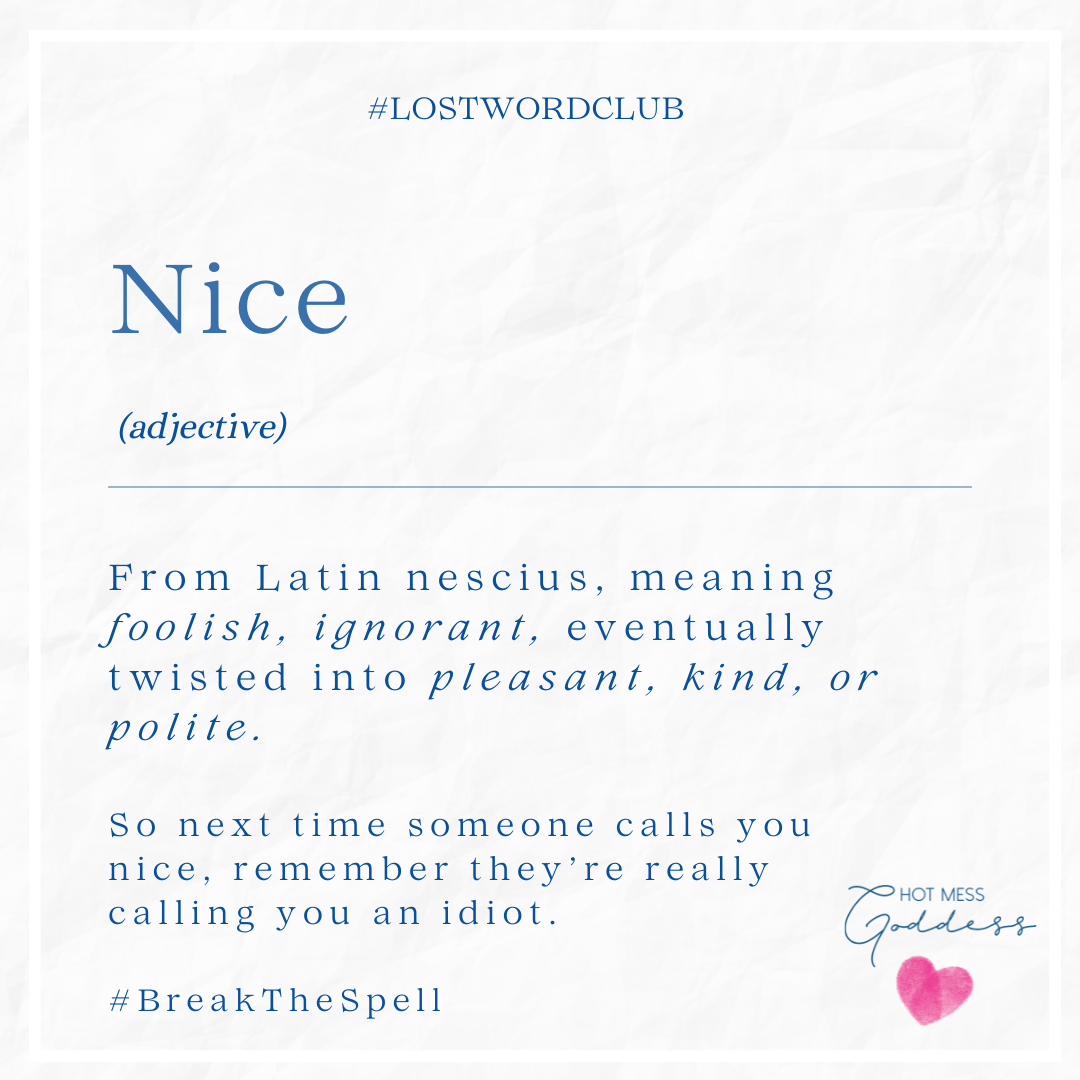
#BreakTheSpell: Nice
Nice was never neutral. It was a velvet-gloved command: be pleasant, be agreeable, don’t make anyone uncomfortable.
An extract from the upcoming Little Dictionary of Distorted Words, Volume One: RECLAIMED.
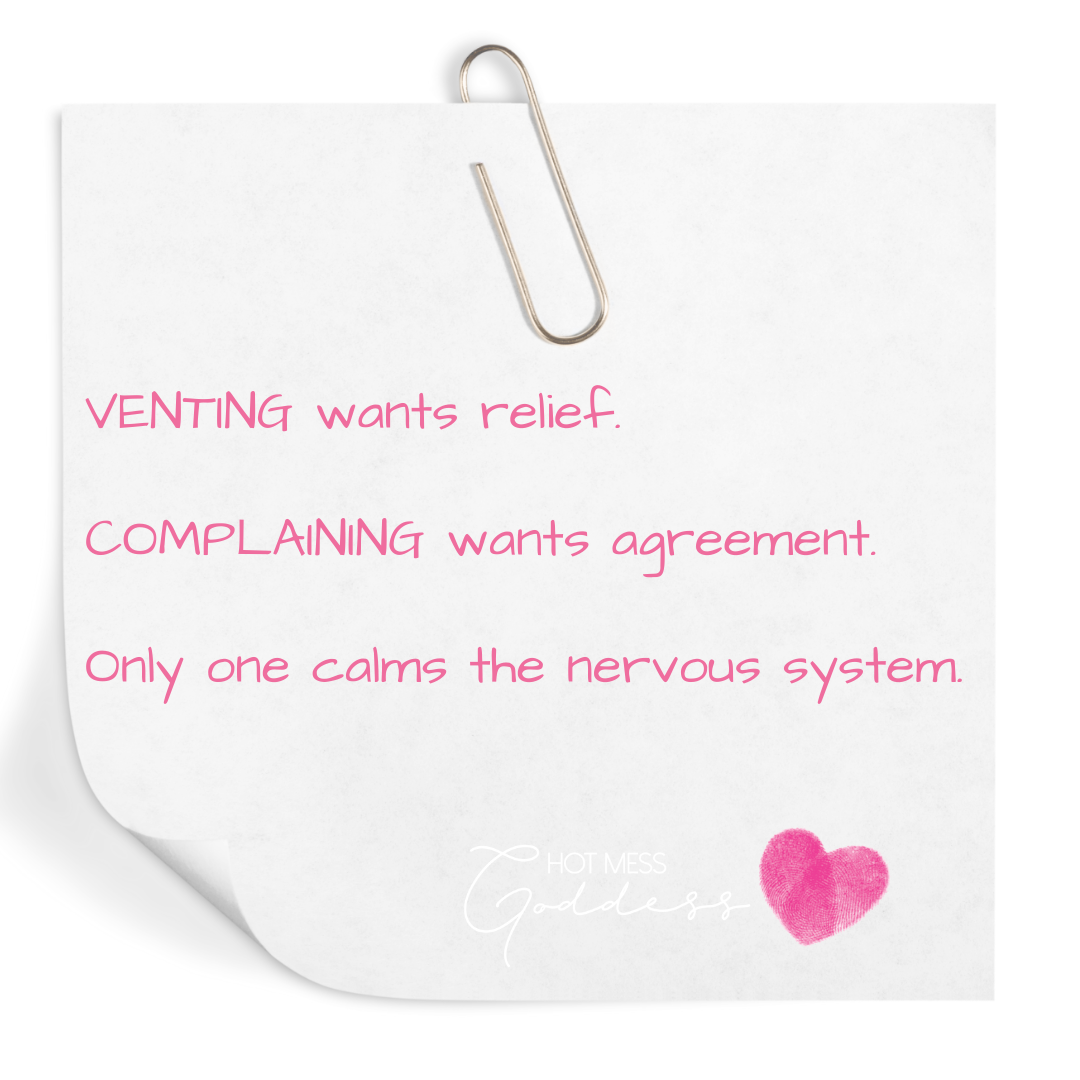
Venting vs Complaining: Why One Calms Your Nervous System and the Other Keeps You Stuck
Venting and complaining can sound almost identical, but they do very different things. One releases the charge. The other rehearses the story.
Learn how to tell the difference—and why the language you repeat matters.